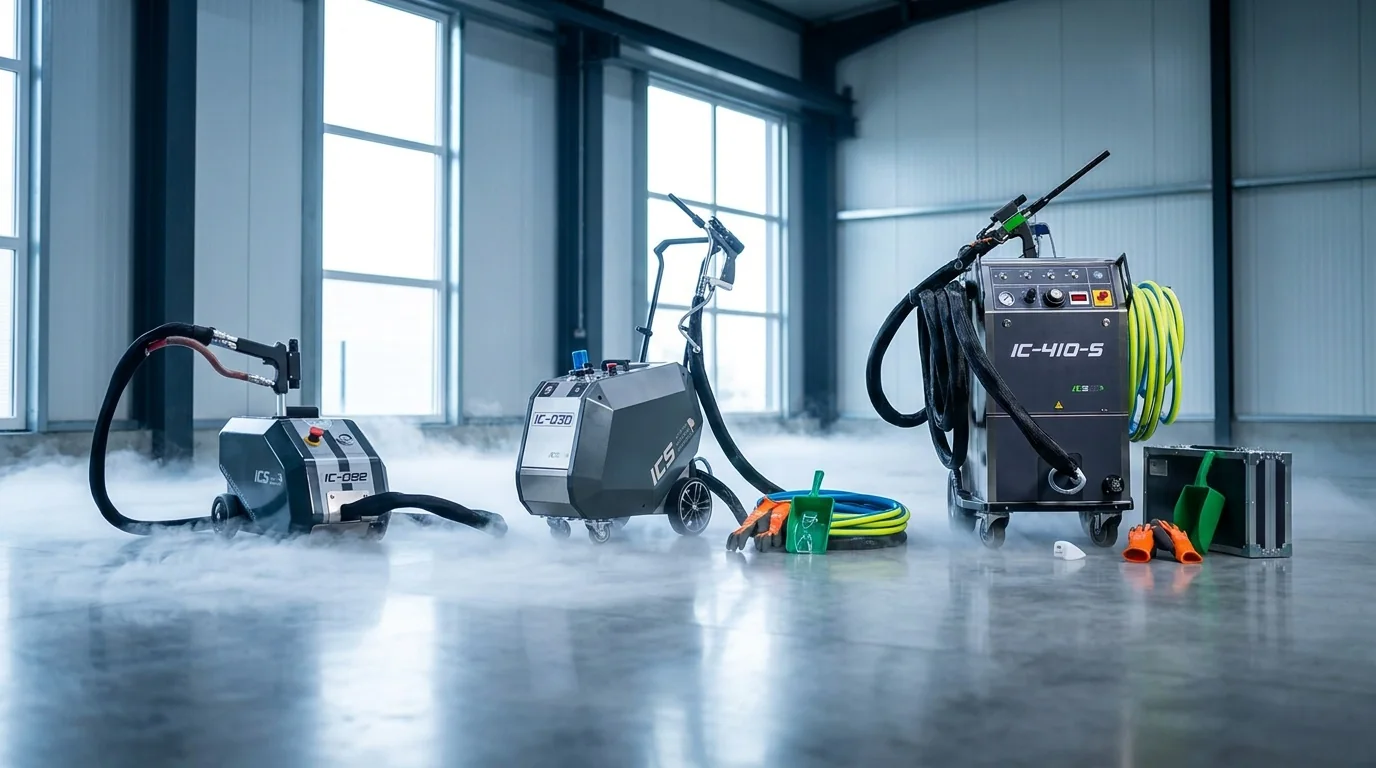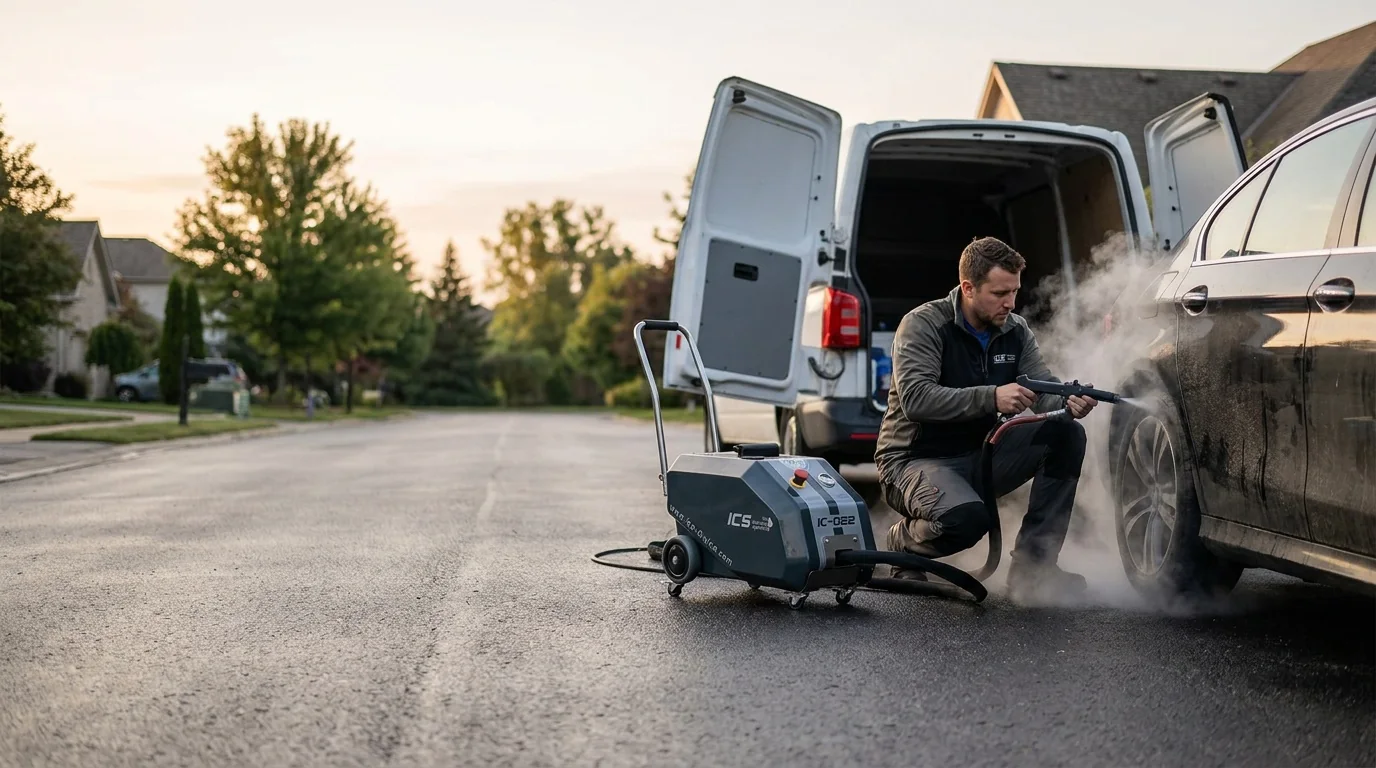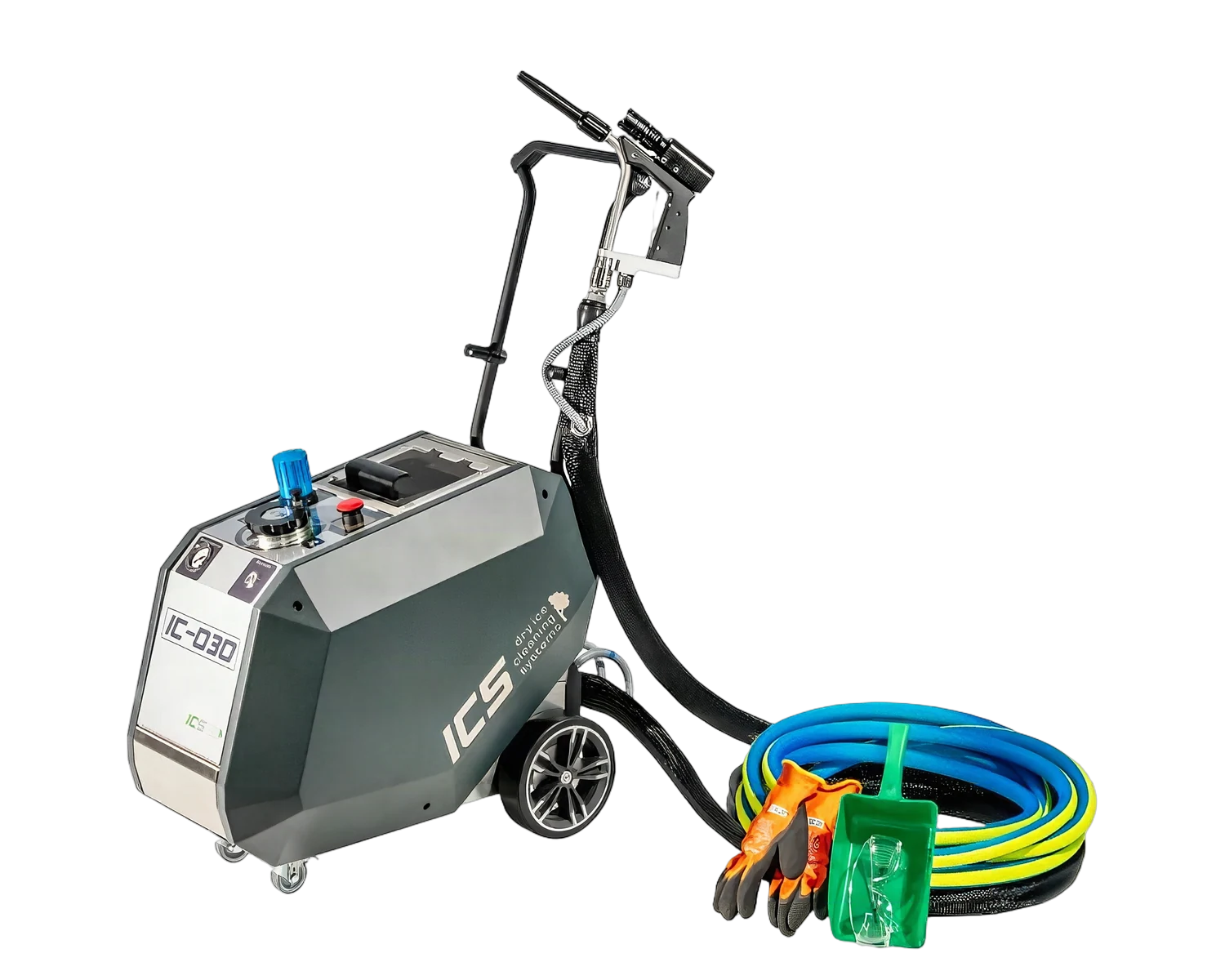
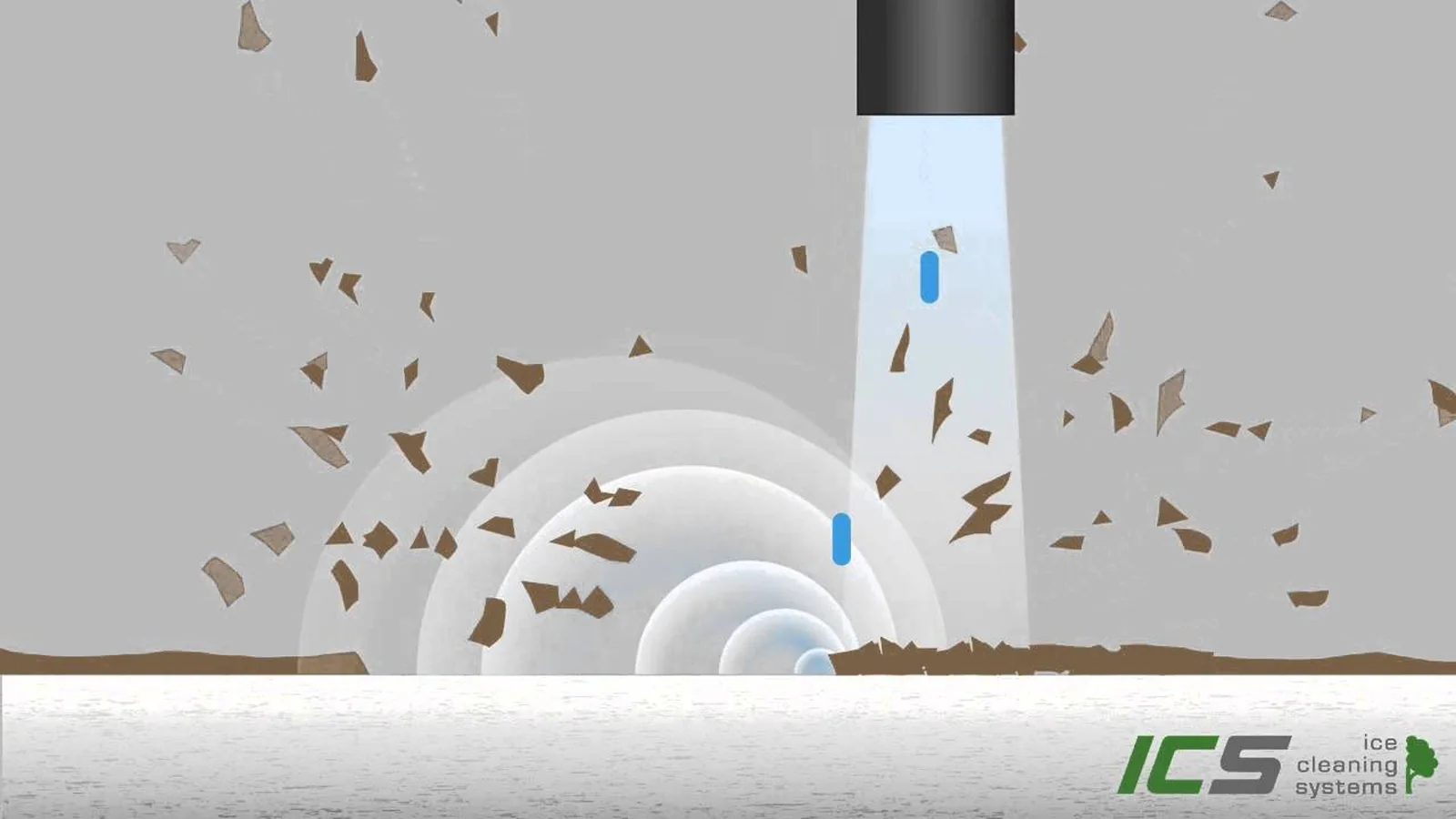
A dry ice machine shoots small pellets of frozen CO2 at a surface with compressed air. The pellets clean with three effects at once.
1. Impact
The pellets hit the dirt at high speed. ICS says they can travel above the speed of sound. The hit knocks the dirt loose from the surface.
2. Cold
Dry ice is about -79 degrees C. The cold makes the dirt brittle, so it cracks and lifts off bit by bit.
3. Gas
On contact, the pellet turns from a solid straight into gas. This is called sublimation. No pellet is left behind.
What is left
Only the dirt. There is no water to dry, no solvent to dispose of and no grit to sweep. ICS says the method leaves no secondary waste, is non-toxic and odourless, and often needs no dismantling of the equipment. You sweep up the dirt. That is all.
Good to know
- On delicate parts, test a small spot first and turn the pressure down. Turn it up for heavy buildup.
- Work in a ventilated space. Dry ice turns into CO2 gas.
- Wear ear protection. Blasting is loud, 85 to 120 dB for most jobs.
- Dry ice removes grease, oil and grime well. For thick rust or heavy coatings, another method can be faster.
By LABCO2